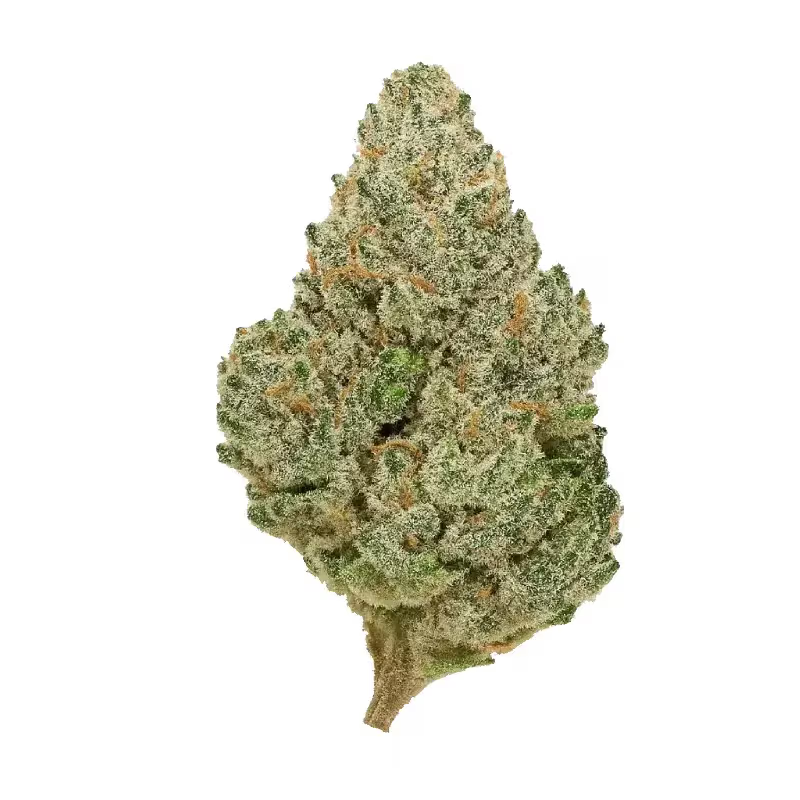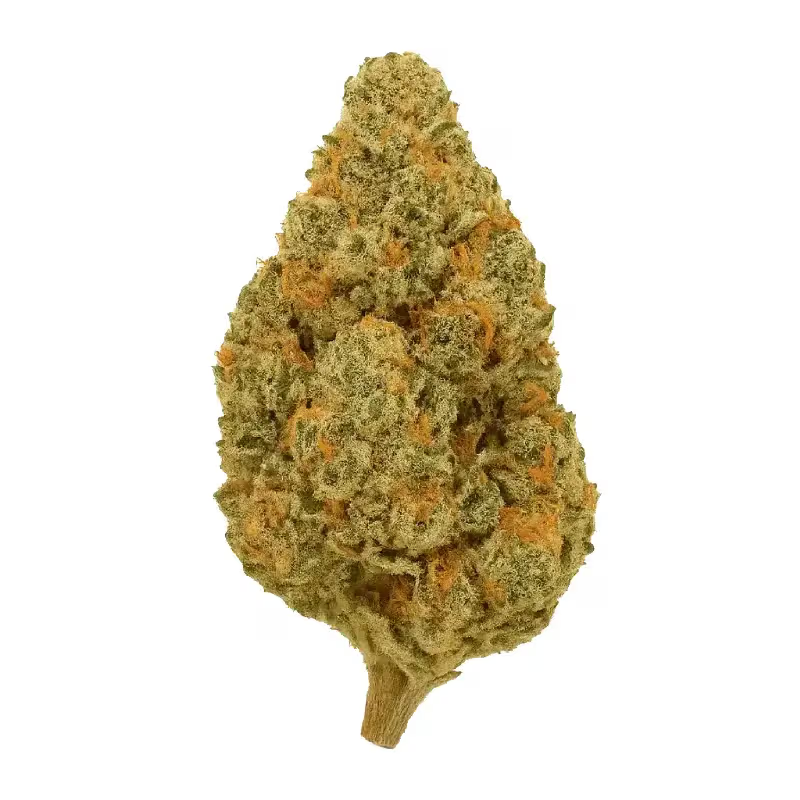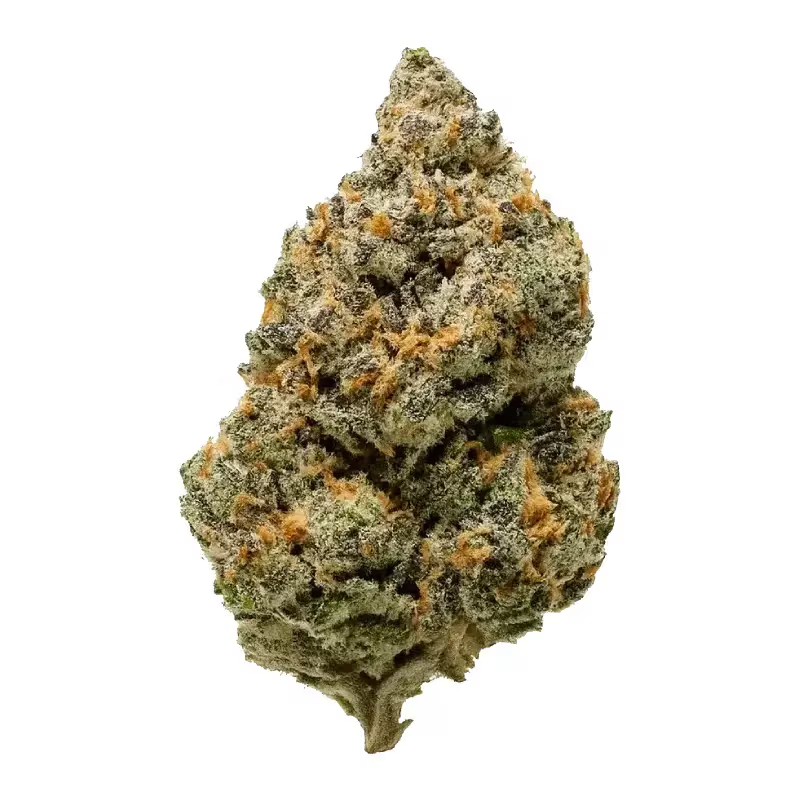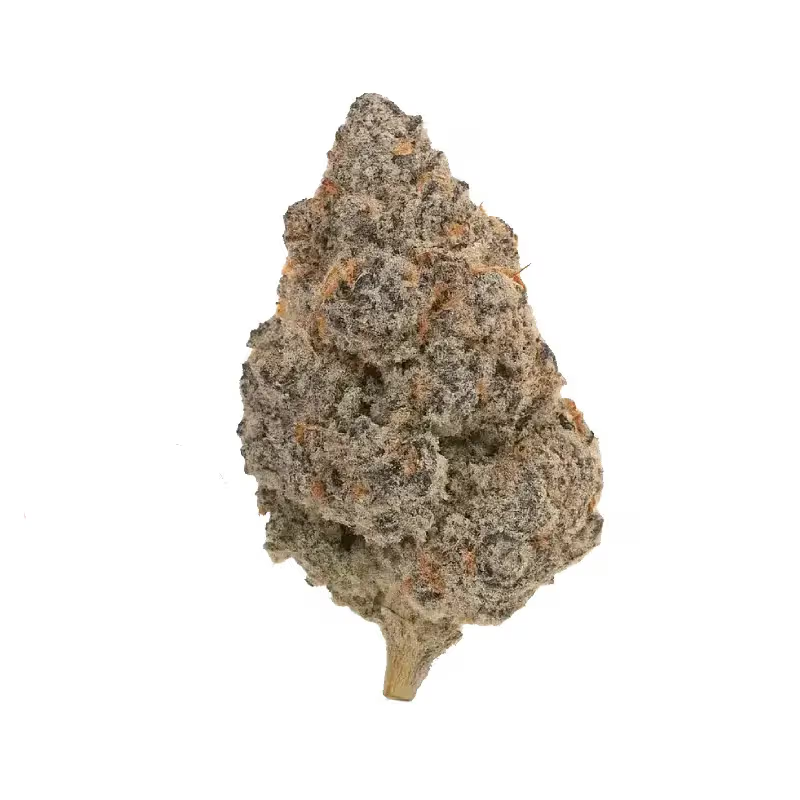
If you’ve ever looked at a hemp COA or product label and thought, “Wait… 0.3% THC is legal, but people still say this hits?” you are not crazy. The confusion usually comes from one thing: the law is written around Delta-9 THC by dry weight, while most of the “strength” people feel from flower comes from what happens after you heat it.
This guide breaks it down in plain English: what 0.3% THC means, why “dry weight” matters, where THCA comes in, and how BakeBoxx approaches compliance without pretending the rules are simple.
Is 0.3% THC a lot?
On paper, 0.3% Delta-9 THC is not a lot. If something truly only contained 0.3% THC total and nothing else that converts into THC when heated, most experienced users would consider it mild.
But that sentence has a catch: the federal hemp definition does not say “0.3% total cannabinoids.” It focuses on Delta-9 THC concentration (and it’s calculated by dry weight). That difference is why products that are legally classified as hemp can still feel strong once you actually use them the way people use flower.
The dry weight rule in simple terms
“By dry weight” means the THC percentage is calculated relative to the weight of the product itself.
So if you have one gram of dried flower (1,000 mg total weight), then:
-
0.3% Delta-9 THC means 3 mg of Delta-9 THC per gram (because 0.3% of 1,000 mg = 3 mg).
That is not a huge number compared to what you see in dispensary products, which is why 0.3% sounds tiny.
But the hemp market did not become popular because people wanted 3 mg per gram.
It became popular because many hemp products are built around THCA, not Delta-9 THC.
THCA is the missing piece
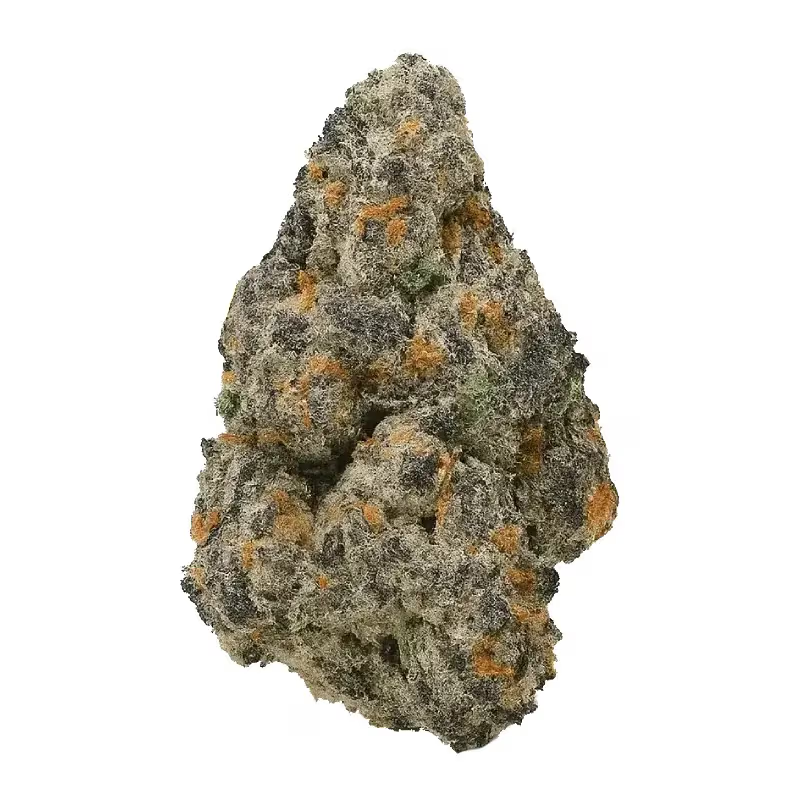
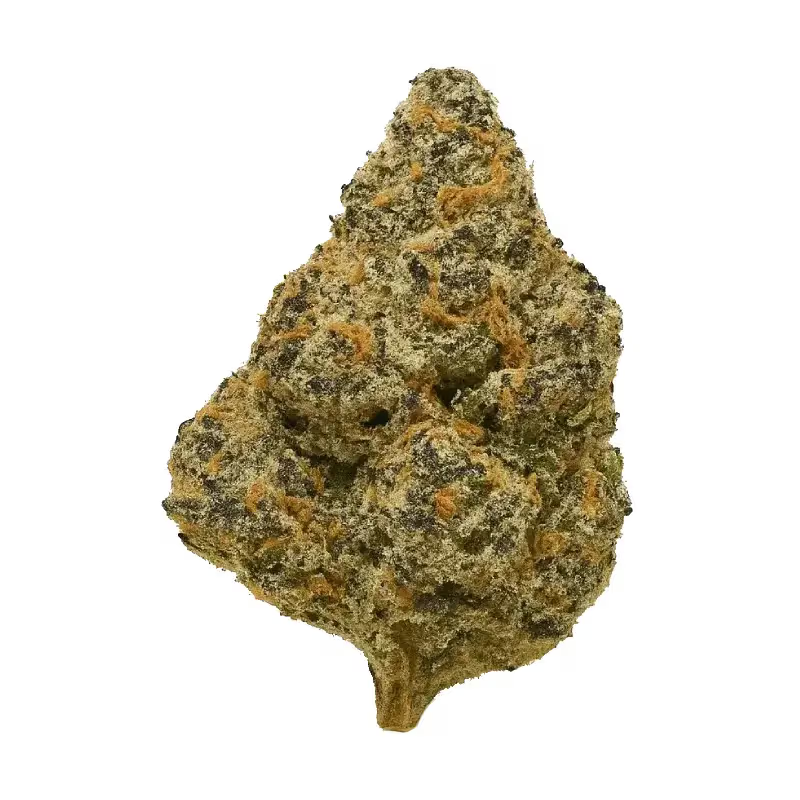
Raw cannabis flower often contains a lot of THCA (tetrahydrocannabinolic acid) and a smaller amount of Delta-9 THC.
THCA is not the same molecule as Delta-9 THC. That matters because the federal hemp definition is tied to Delta-9 THC levels in the plant at the time it’s tested and reported.
Here’s the key point that most people don’t get told clearly:
When you heat THCA, it converts
When you smoke or vaporize flower, THCA converts into Delta-9 THC through a process called decarboxylation (people say “decarb”). Heat changes the molecule.
That is why THCA flower can “do the job” in a way that feels very similar to THC flower when smoked, even if the COA shows Delta-9 THC is under 0.3% before the flower is heated.
So if you’re asking “Is 0.3% THC a lot?” the real answer is:
-
0.3% Delta-9 THC in raw flower is not a lot
-
but high THCA flower can still feel strong once smoked, because the THCA converts during use
Why COAs can look confusing: Delta-9 vs “Total THC”
A lot of lab reports list multiple numbers that get mixed together online:
-
Delta-9 THC (the one tied to the hemp definition)
-
THCA
-
sometimes Total THC (a calculated estimate that includes THCA converted into a THC equivalent)
This is where people start arguing in comments because they are not talking about the same number.
Someone might say, “It’s compliant, it’s under 0.3% THC,” and they mean Delta-9 THC on the COA.
Someone else might say, “No way, it says 25% THC,” and they are looking at Total THC or they are mentally converting THCA into what it becomes after heat.
Both people can be looking at the same COA and still talk past each other.
What the Farm Bill framework means for THCA flower
The 2018 Farm Bill created the legal lane for hemp by defining hemp based on Delta-9 THC concentration (0.3% by dry weight).
That’s the lane THCA flower lives in: flower that is produced, tested, and handled to remain within that legal definition at the time it’s classified and sold.
It’s also why you will hear phrases like:
-
“compliant at time of testing”
-
“Delta-9 THC under 0.3%”
-
“hemp-derived”
-
“federally legal hemp”
The important part for you as a buyer is to understand what that does and does not mean.
It does not mean the flower is “weak.”
It means the flower is being sold under a regulatory definition focused on Delta-9 THC content in the raw material.
How BakeBoxx stays compliant without playing games
Compliance should not be vague or hidden behind buzzwords. At a high level, staying compliant means treating the rules like rules, not like marketing copy.
Here’s what that looks like in practice:
1) We focus on Delta-9 THC limits as written
The standard everyone references is the 0.3% Delta-9 THC by dry weight threshold. That is the core measurement that determines whether something is classified as hemp under the federal definition.
2) We use lab testing and documentation seriously
COAs matter because they show cannabinoid content and help keep products transparent. When you are buying anything in this space, you should be able to access lab results and understand what you’re seeing.
THCA flower is popular because when you smoke it, it converts and can feel like traditional THC flower. That is not a hack. That is chemistry.
3) We keep the messaging clean
We do not need to promise anything unrealistic. People already know what they are looking for. Our job is to provide compliant product, clear info, and a straightforward buying experience.
So… is 0.3% THC a lot for you?
It depends on what you mean by “THC.”
If you mean Delta-9 THC in the raw flower, 0.3% is not a large amount.
If you mean “Will this flower feel strong when smoked,” then the better question is:
-
How much THCA is in it?
-
How fresh is it and how well is it stored?
-
How do you personally respond to cannabinoids and terpenes?
-
Are you smoking, vaping, or using it another way?
In other words, people do not buy THCA flower because they want 0.3% Delta-9 THC.
They buy it because THCA flower can deliver a familiar experience after heat, while being sold inside the hemp framework as written.
Quick reality check: legality and use are not the same thing
One more thing that matters: even if a product is produced under the federal hemp definition, state rules can vary, and how something is treated in real life can depend on local enforcement and policy. If you travel or order across state lines, it’s smart to know your local rules.
Also, none of this is legal advice. It’s just a clear explanation of how the dry-weight rule, Delta-9 THC, and THCA tend to be discussed and understood in the market.