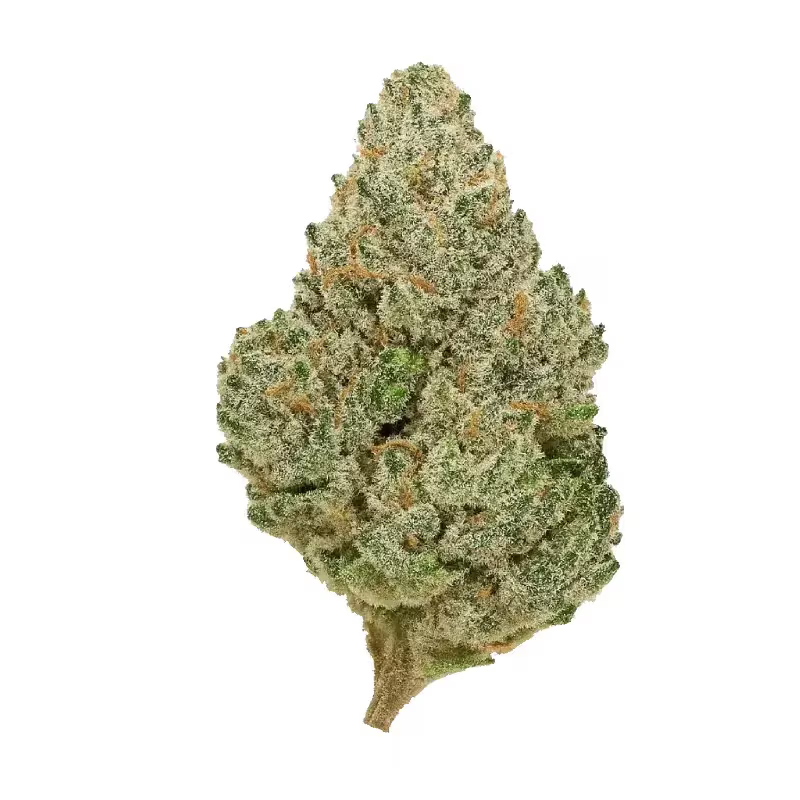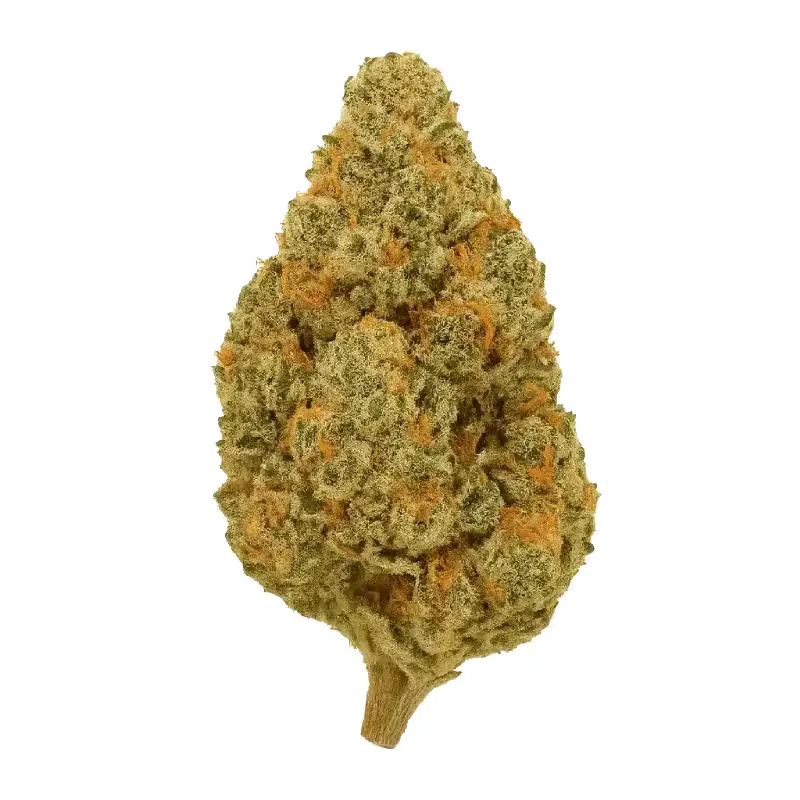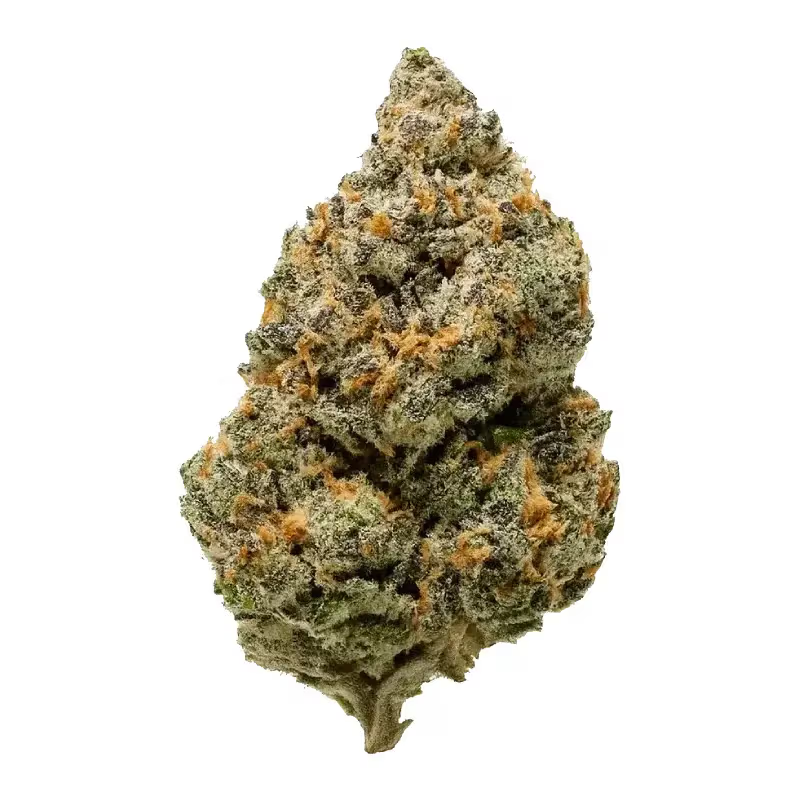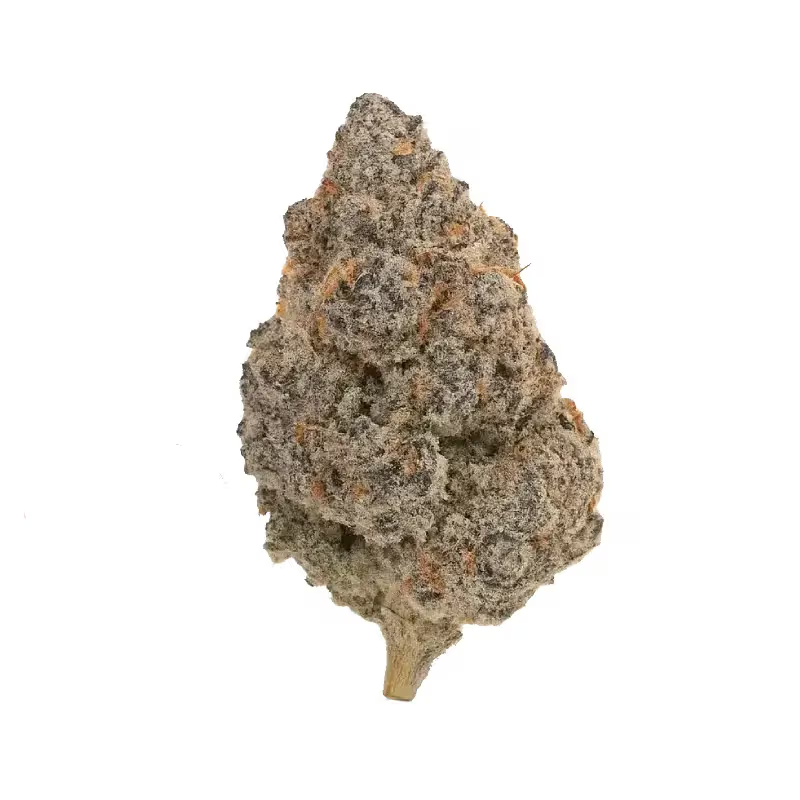
If you mean “safe” as in risk-free, no. Smoking anything exposes your lungs to hot air, tiny particles, and combustion byproducts. THCa flower can be cleaner or riskier depending on how it was grown, handled, and tested, but inhaling smoke is never a zero-risk activity.
That said, if people who smoke regardless are curious about THCa because it sounds different:
-
Is THCa “sketchy” or chemically unsafe by default? Not necessarily.
-
Does THCa become the same kind of experience as THC when smoked? Yes
-
Does product quality matter a lot here? More than people think.
Below is the real breakdown, in plain language, plus a checklist to lower your risk if you choose to smoke THCa.
What THCa is and what happens when you smoke it
THCa is the acidic “raw” form found in fresh cannabis and hemp flower. On its own, THCa is not the same as THC in how it behaves in the body. When you apply heat (smoking, vaping, dabbing), THCa decarboxylates and becomes delta-9 THC.
Why that matters:
-
Effects: Smoking THCa flower can feel similar to smoking THC-dominant flower because the THCa converts with heat.
-
Potency surprises: People underestimate THCa because it “sounds different,” then overdo it.
What actually makes THCa risky (or not) in real life
1) Contaminants and bad inputs
If a flower is dirty, improperly cured, or contaminated, smoking it can be a problem fast.
Watch-outs that matter more than strain names:
-
Mold and microbial contamination
-
Pesticides
-
Heavy metals
-
Residual solvents (more relevant for concentrates than plain flower)
-
Mystery “infused” flower from unknown sources
This is why COAs and reputable sourcing matter.
2) “Sprayed” or altered flower
A lot of the horror stories online are not about clean THCa flower. They are about:
-
flower sprayed with additives
-
infused material sold without disclosure
-
inconsistent batches with no real documentation
If you are an adult choosing to smoke, your best move is avoiding anything that does not come with transparent batch info.
Is vaping THCa “safer” than smoking it?
It depends on what “vaping” means.
-
Dry herb vaping (heating flower without combustion) may reduce exposure to some combustion byproducts, but it is not risk-free and quality still matters.
-
Oil cartridges and disposables can be higher risk if they come from informal sources or unknown manufacturing standards.
A key reason the industry got a black eye was the EVALI outbreak, which was strongly linked to vitamin E acetate in illicit THC vaping products, and CDC warned specifically about THC-containing products from informal sources.
Takeaway:
-
If you do not know the source and testing behind a vape product, do not treat it like a safer option.
-
If you are choosing between methods, focus on verified sourcing and a method that avoids combustion if possible.
Who should not smoke THCa
Not medical advice, just common-sense harm reduction. If any of these apply, it is smart to talk to a clinician:
-
You have asthma, COPD, chronic bronchitis, or frequent shortness of breath
-
You are pregnant or breastfeeding
-
You have a history of panic attacks or severe anxiety
-
You are taking meds where THC intoxication could create risk (driving, work safety, etc.)
-
You are underage (THCa products are for adults only)
A practical “safer” checklist for smoking THCa flower
If you are going to smoke THCa anyway, here is how to reduce avoidable risk.
Product quality checks
-
Look for a COA that matches the strain you are buying, not a random lab PDF.
-
Check for contaminant panels (microbials, pesticides, heavy metals).
-
Avoid vague “infused” or “enhanced” flower unless it is clearly disclosed and tested.
-
Prefer reputable brands with consistent documentation over the cheapest option online.
Use and dose checks
-
Start with 1–2 small hits, then wait.
-
Hydrate, and do not chain-smoke back-to-back.
-
If you cough hard, that is your body telling you something. Slow down.
-
Avoid mixing with tobacco.
Environment checks
-
Do not smoke indoors around others. Secondhand cannabis smoke contains toxic and cancer-causing chemicals.
Is THCa legal and does legality equal safety?
Legality and safety are different questions.
At the federal level, the 2018 Farm Bill defines hemp using a 0.3% delta-9 THC threshold on a dry-weight basis.
But states can have stricter rules, and the hemp-derived cannabinoid landscape keeps evolving.
Even when a product is legal to sell, it can still be low quality if the seller cuts corners. So treat legality as a baseline, not a quality stamp.
FAQ
Is THCa safer than THC to smoke?
From a lung standpoint, smoking THCa flower and smoking THC flower are both still smoking plant material. The bigger differentiator is clean sourcing and testing, not the letters on the label.
Why do some people say THCa is dangerous?
Usually one of these:
-
they bought from a sketchy source with no real testing
-
the product was altered, sprayed, or mislabeled
-
they overconsumed and had an unpleasant experience
What is the “safest” way to consume THCa?
There is no perfect answer, but generally:
-
avoid combustion when possible
-
avoid informal or mystery vape sources
-
prioritize batch-matched testing and transparent documentation
Where BakeBoxx fits in
Our stance is simple: you should be able to verify what you are buying. If you are shopping THCa flower, look for brands that treat documentation like it matters, because it does. Shop our THCA Flower and Deals, because we care what you smoke.