Is THCA Fake?
To someone new to cannabinoids, they might be wondering whether is THCA synthetic or natural. The simple name change can have you picture everything coming from a lab instead of a plant. That feeling goes against what cannabis culture has always represented. Natural inputs, plant medicine, and trust in what comes from the earth.
That confusion is understandable.
The modern hemp market includes both naturally occurring cannabinoids and lab-altered alternatives, and the line between them is not always explained clearly. THCA sits right in the middle of that conversation, which is why people keep asking the same question.
Is THCA synthetic or natural?
Short answer:
THCA is naturally produced by the cannabis plant.
However, some THCA on the market is made through chemical conversion in a lab, usually starting from CBD or other cannabinoids.
That distinction matters more than most people realize. Two products can test as THCA on paper while being completely different in how they were made, how they behave, and how trustworthy they are.
In this blog, we break it all down simply. It's time to put on our glasses.
What Are Altnoids? (Clarified Definition)
Altnoids, or alternative cannabinoids, are cannabinoids that are either:
-
Modified versions of naturally occurring cannabinoids, or
-
Minor cannabinoids produced or amplified through chemical conversion
The primary natural reference points are CBD and THC, which occur in meaningful amounts in the plant. Altnoids often start with those molecules and are chemically adjusted to create different effects or legal classifications.
THCA is not inherently an altnoid, but it is often grouped with them because of how some products are manufactured.
What Is THCA? (Explained Simply)
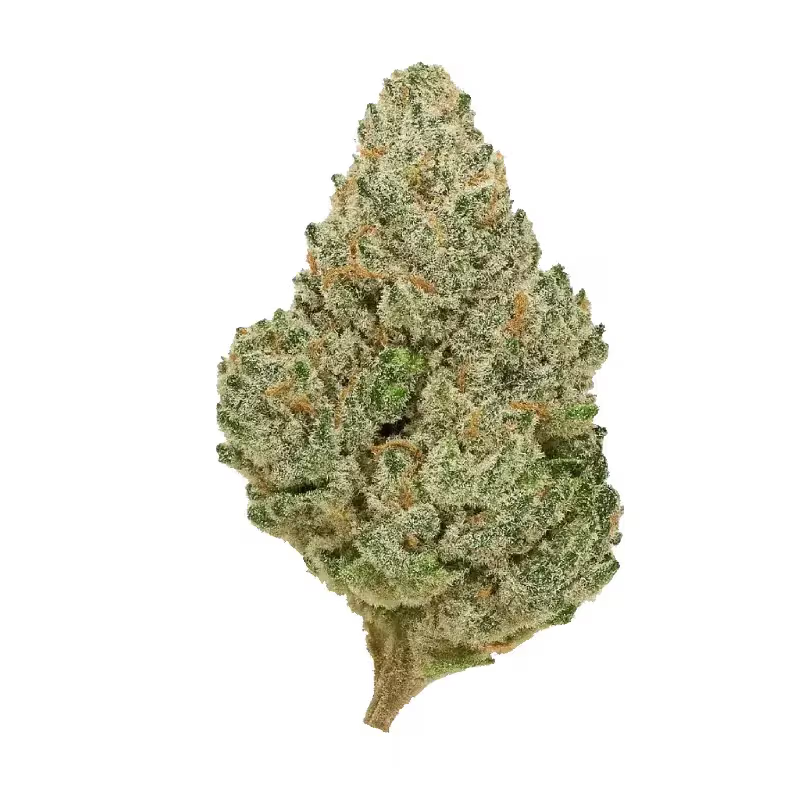
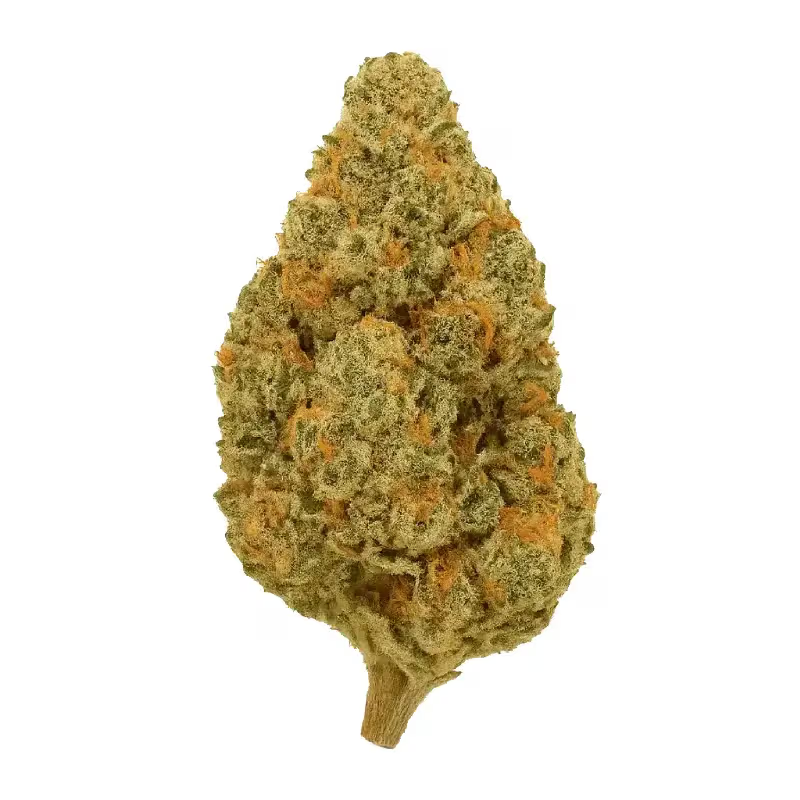
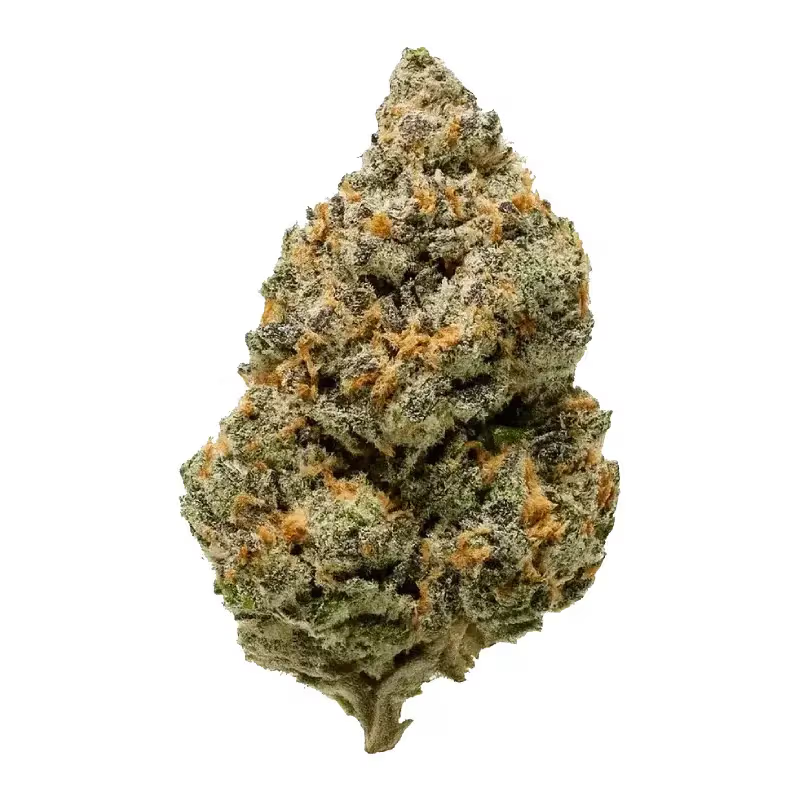
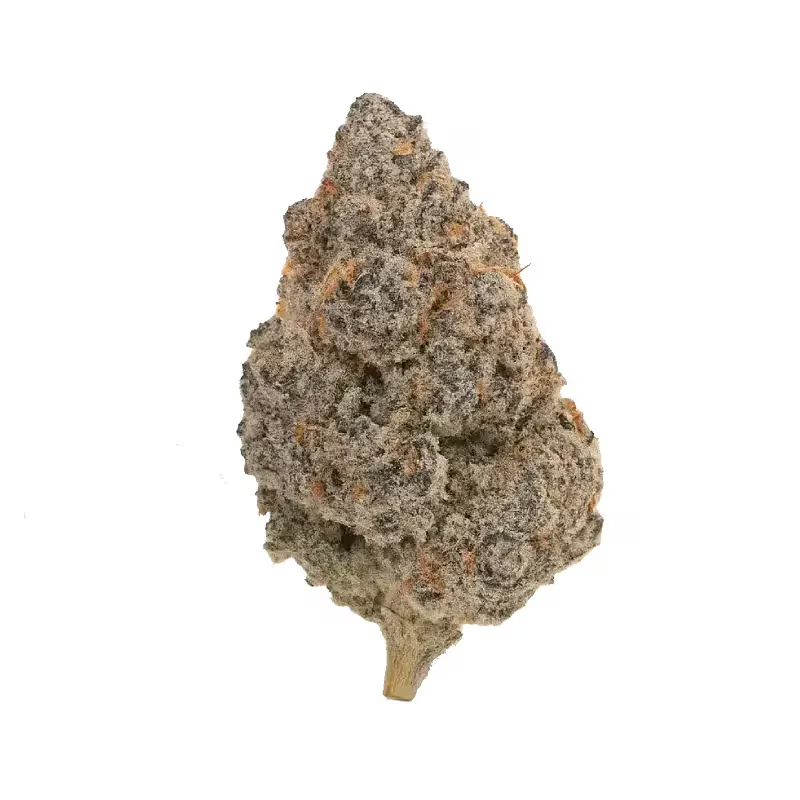
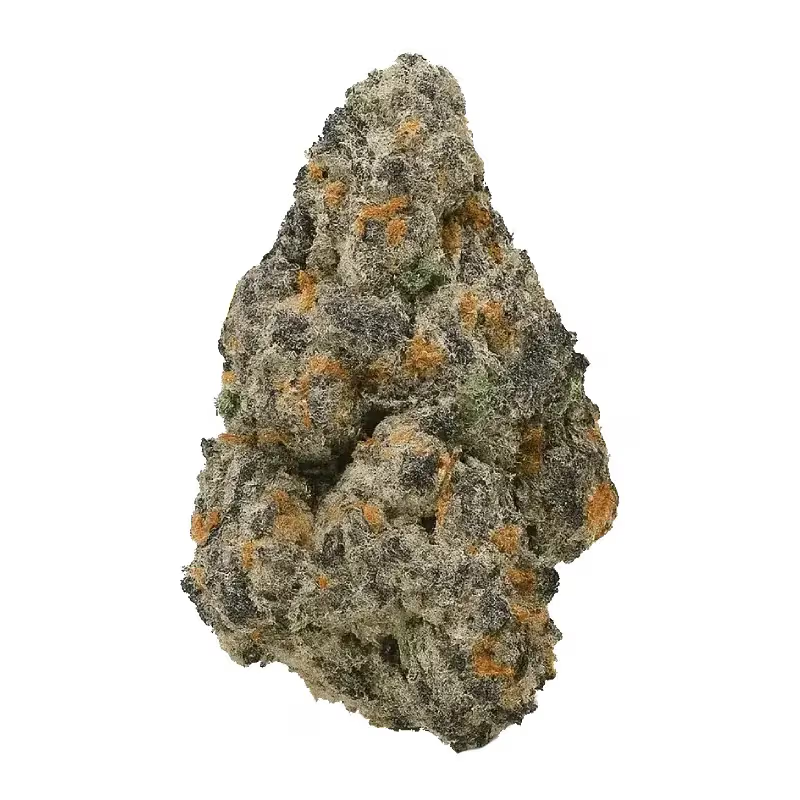
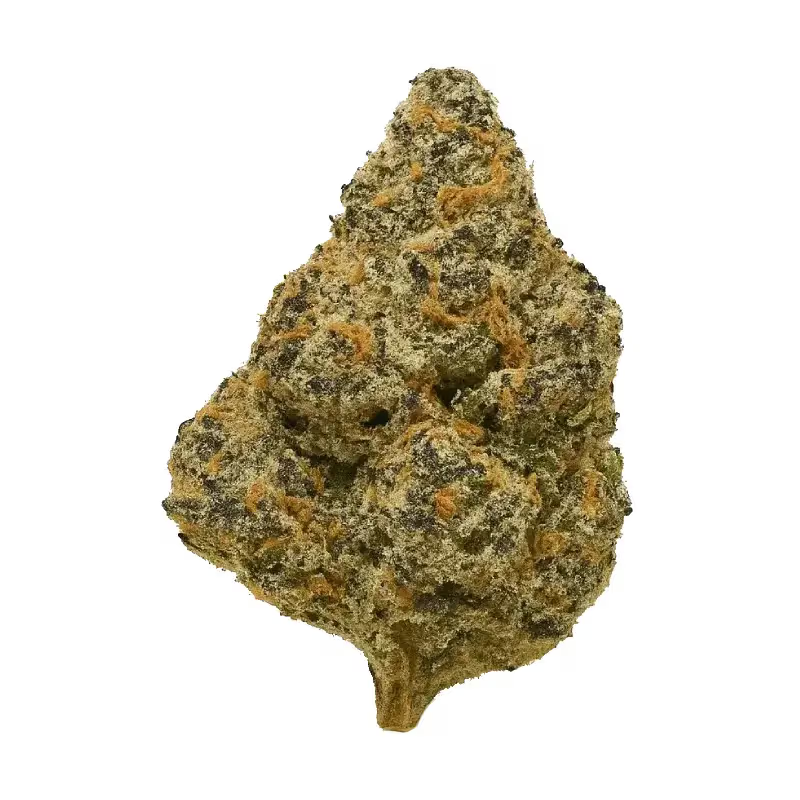
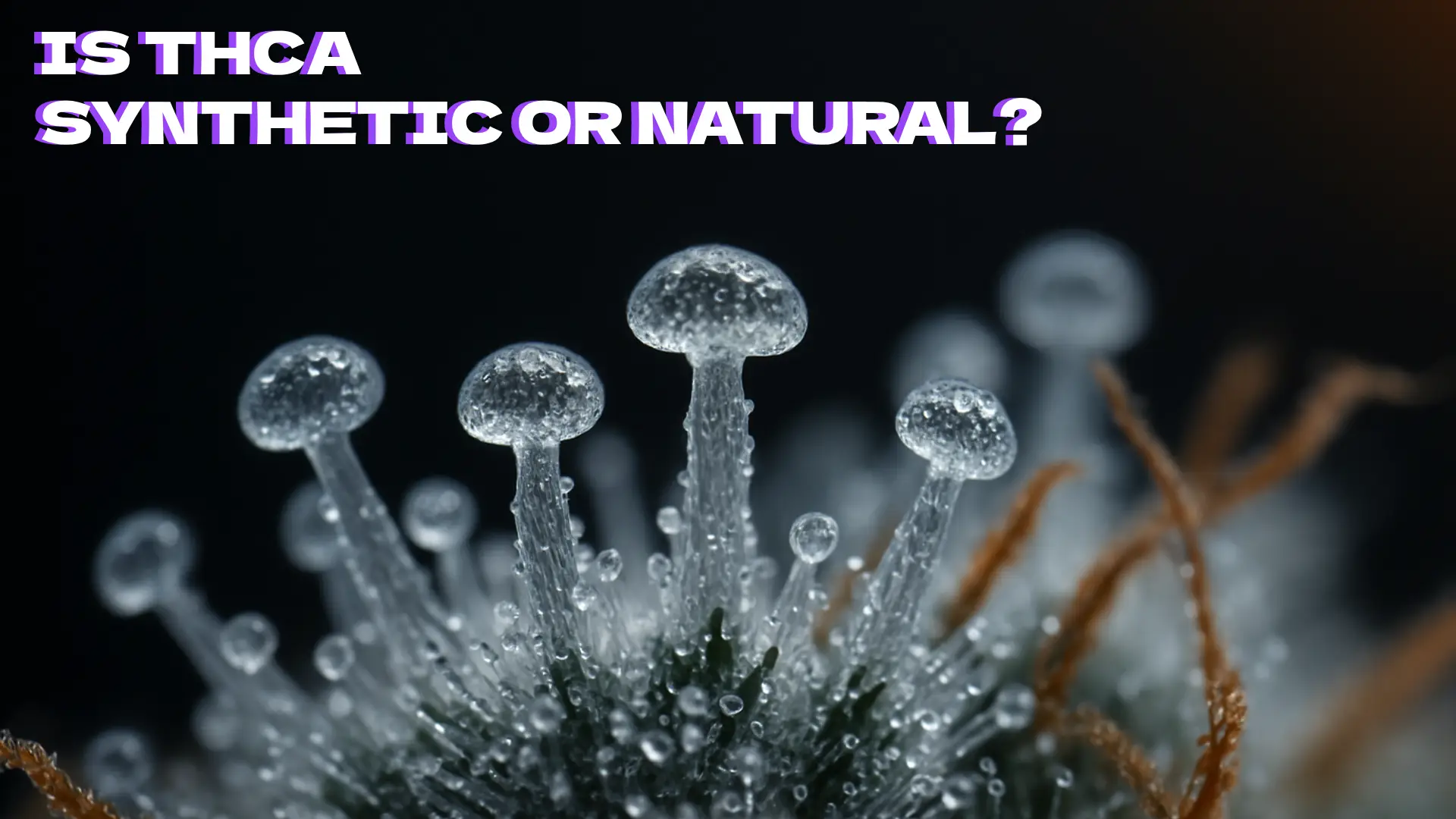
THCA (tetrahydrocannabinolic acid) is a naturally occurring cannabinoid found in raw cannabis and hemp plants. It forms in the plant’s resin glands (trichomes) and is the direct precursor to THC, the compound responsible for the psychoactive “high.”
- THCA stands for tetrahydrocannabinolic acid
- It is the raw, non-psychoactive form of THC
- THCA is found in fresh, uncured cannabis and hemp flowers, not made in a lab in nature
Where you’ll find THCA naturally:
- Hemp/cannabis flower (especially indoor/greenhouse with dense trichomes)
- Solventless extracts (e.g., hash rosin)
- Crystalline “diamonds” (can be natural or processed see below)
Why does THCA matter?
Because under U.S. hemp law, THCA is legal if the plant contains less than 0.3% Delta-9 THC.
Try our natural THCA flower here!
Synthetic vs Natural THCA
Natural THCA
- Origin: Trichomes on living plants, formed by THCA synthase.
- Typical products: Flower, live rosin, bubble hash, some mechanical/low-temp extractions.
- Pros: Plant-derived, strain-specific terpenes, lower processing steps.
- Considerations: Must pass pesticide, heavy metal, microbe, and residual solvent tests; quality varies by grower and post-harvest handling.
Synthetic (or Semi-Synthetic) THCA
- Origin: Lab-made through chemical synthesis or conversion of other cannabinoids (e.g., CBD, CBG, or THC) into THCA.
- Typical products: Certain isolates or reconstituted formulations (e.g., THCA crystals dissolved into a carrier).
- Pros: Potential for very high purity/isolation, batch uniformity.
- Considerations: Requires impeccable process control; risks include residual reagents/solvents, unknown byproducts, and label/marketing confusion if not disclosed
How Natural THCA Forms in Cannabis (Plant Process)
- Cannabis plants produce CBGA the “mother cannabinoid.”
- Plant enzymes (THCA synthase) convert CBGA into THCA.
- THCA collects in the plant’s trichomes (frosty crystals on the buds).
Natural Sources of THCA Include:
- Raw hemp or cannabis flower
- Live rosin and live resin concentrates
- Bubble hash and ice water hash
- THCA diamonds extracted from the flower using cold extraction
- Fresh cannabis juice
None of these requires synthetic chemicals, just plant biology.
How Synthetic THCA is Made
While plants naturally produce THCA, labs can manufacture or convert it. Methods vary by jurisdiction, lab sophistication, and available feedstock.
1) Direct Chemical Synthesis
- Concept: Assemble THCA’s molecular structure using chemical reagents and multi-step organic synthesis (rare outside advanced labs).
- Challenges: Complex steps, potential for side products, stringent purification needed.
2) Conversions from Other Cannabinoids
More common in real-world markets are semi-synthetic conversions, starting with abundant legal feedstocks:
- From CBD (hemp-derived):
- CBD can be converted to THC isomers (e.g., Δ8/Δ9) using acid catalysis.
- With oxidation/acidification and controlled conditions, THCA can be formed.
- Risks: Acid residues, solvent carryover, and reaction byproducts if not expertly purified and fully tested.
- From CBG/CBGA:
- CBG can serve as a precursor; with specific catalysts/enzymes/conditions, labs can steer toward THCA.
- Pros/cons mirror CBD conversions: chemistry skill + QC define outcomes.
- From THC (reverse “acidification”):
- Chemically converting THC back to THCA by adding a carboxyl group is theoretically possible through carboxylation routes, but not common in typical commercial settings due to complexity and inefficiency.
3) Crystallization/Isolation
- Crystallization can create THCA diamonds from a natural extract (still natural origin) or from a converted stream (semi-synthetic origin).
- Bottom line: Crystals alone don’t prove origin. Ask for process transparency and full-panel COAs.
Other Synthetic Cannabinoids (Context You Should Know)
Synthetic routes aren’t unique to THCA. The broader market includes:
- Δ8-THC from CBD (semi-synthetic): Popular due to hemp feedstock; quality varies widely by process control and purification rigor.
- HHC (hydrogenated THC): Produced by hydrogenation of THC; psychoactive profile differs.
- THCO (acetate esters) [historically noted]: Formed by acetylation; safety controversies and regulatory pushback have curtailed availability.
- Novel analogs (e.g., THCP): Some are naturally occurring in trace amounts but commercial products may rely on synthetic/semi-synthetic production pathways.
Why this matters:
If you care about natural origin, full-spectrum effects, and clean processing, you need transparent sourcing and verifiable testing, regardless of the cannabinoid acronym.
Is Synthetic THCA Safe?
Safety isn’t about the word “synthetic” alone it’s about how the product is made and how thoroughly it’s tested.
What can make synthetic or converted products risky?
- Residual chemicals: Acids, catalysts, solvents not fully removed.
- Unknown byproducts: Side reactions can produce minor compounds not evaluated for inhalation/ingestion.
- Inadequate purification: Skipping proper chromatography or distillation steps leaves contaminants.
- Poor documentation: No GMP, no batch records, vague sourcing.
What makes natural products risky?
- Pesticides/heavy metals: Uptake from soil or sprays.
- Microbial contamination: Mold, bacteria, or mycotoxins from poor drying/cure or storage.
- Residual solvents: From extraction if not fully purged.
- Delta-9 compliance vs total THC: Legal compliance doesn’t equal safety testing full-panel COAs still matter.
How to shop safely (Natural or Synthetic)
- Check sample date & batch match: COA must match lot number and be recent.
- Prefer transparent brands: Those disclosing origin (flower vs conversion), extraction method, and manufacturing standards.
- Look for consistency: Multiple batches tested, not one cherry-picked report.
- Read form-factor clues: Flower and solventless hash are typically natural THCA; reconstituted carts or isolates could be natural or synthetic, verify.
Subtle brand note: BakeBoxx publicly emphasizes naturally derived THCA from hemp flower, routine full-panel testing, and high potency flower, so you can use as a checklist when comparing any brand.
FAQ
1) So… is THCA synthetic or natural?
THCA is naturally produced by the plant. Synthetic (or semi-synthetic) THCA is a lab-created version or a chemical conversion from other cannabinoids. Both can exist on the market; COAs and process transparency tell you which you’re buying.
2) How can I tell if my THCA is natural or synthetic?
- Ask if it’s flower-derived or conversion-derived.
- Review COAs and brand disclosures.
- Form matters: Flower and solventless hash are typically natural; isolates/distillates may be natural or synthetic verify.
3) Is synthetic THCA illegal?
Laws vary by country/state and often hinge on total THC calculations and intended use. Some jurisdictions treat converted cannabinoids differently. Always check local regulations, especially rules that compute “total THC” = THCA × 0.877 + Δ9-THC.
4) Is synthetic THCA unsafe?
Not inherently but it requires pharmaceutical-style process control and full-panel testing to ensure no harmful residues or byproducts. Poorly made synthetics are risky; well-made, well-tested products can be safe.
5) Why do some brands prefer natural THCA?
- Consumer trust in plant-derived inputs
- Full-spectrum entourage potential (when minimally processed)
- Simpler narratives for compliance and labeling
6) Are THCA diamonds natural or synthetic?
Either. Diamonds can be crystallized from natural extracts (still of natural origin) or from converted streams (semi-synthetic). The only way to know is process disclosure + COAs.
7) Does “hemp-derived” always mean natural?
No. “Hemp-derived” can describe the origin of the starting material (e.g., CBD from hemp), even if the final compound was chemically converted. Look for explicit “naturally extracted” language and testing.