Key Takeaways
- THCA is naturally abundant in hemp flower; THCP is rare and mostly lab-derived from CBD.
- THCA is non-psychoactive in raw state; THCP is active immediately
- The widely-repeated "33x stronger than THC" claim is misleading; that number measures binding affinity in a petri dish, not the strength of the effects.
- Real-world THCP potency is estimated at roughly 5-10x delta-9 THC, not 33x.
- Both are federally legal under the 2018 Farm Bill when hemp-derived and under 0.3% delta-9 THC, but state laws vary.
If you've been in the hemp space for a while, you've probably seen THCA and THCP thrown around like they're competing for your attention. Maybe you're wondering what the real difference is, which one's actually stronger, or whether the hype matches reality.
Here's the thing: the hemp industry loves its buzzwords. A new compound gets discovered, marketing teams get excited, and suddenly everyone's repeating the same stat without checking if it's accurate.
At BakeBoxx, we'd rather give you the honest breakdown. This guide compares THCA and THCP on what actually matters: potency, effects, legality, and drug test risk. We'll also clear up the "33x stronger" myth that every other article keeps repeating.
This isn't medical advice, just a straightforward comparison based on available research and real-world experience.
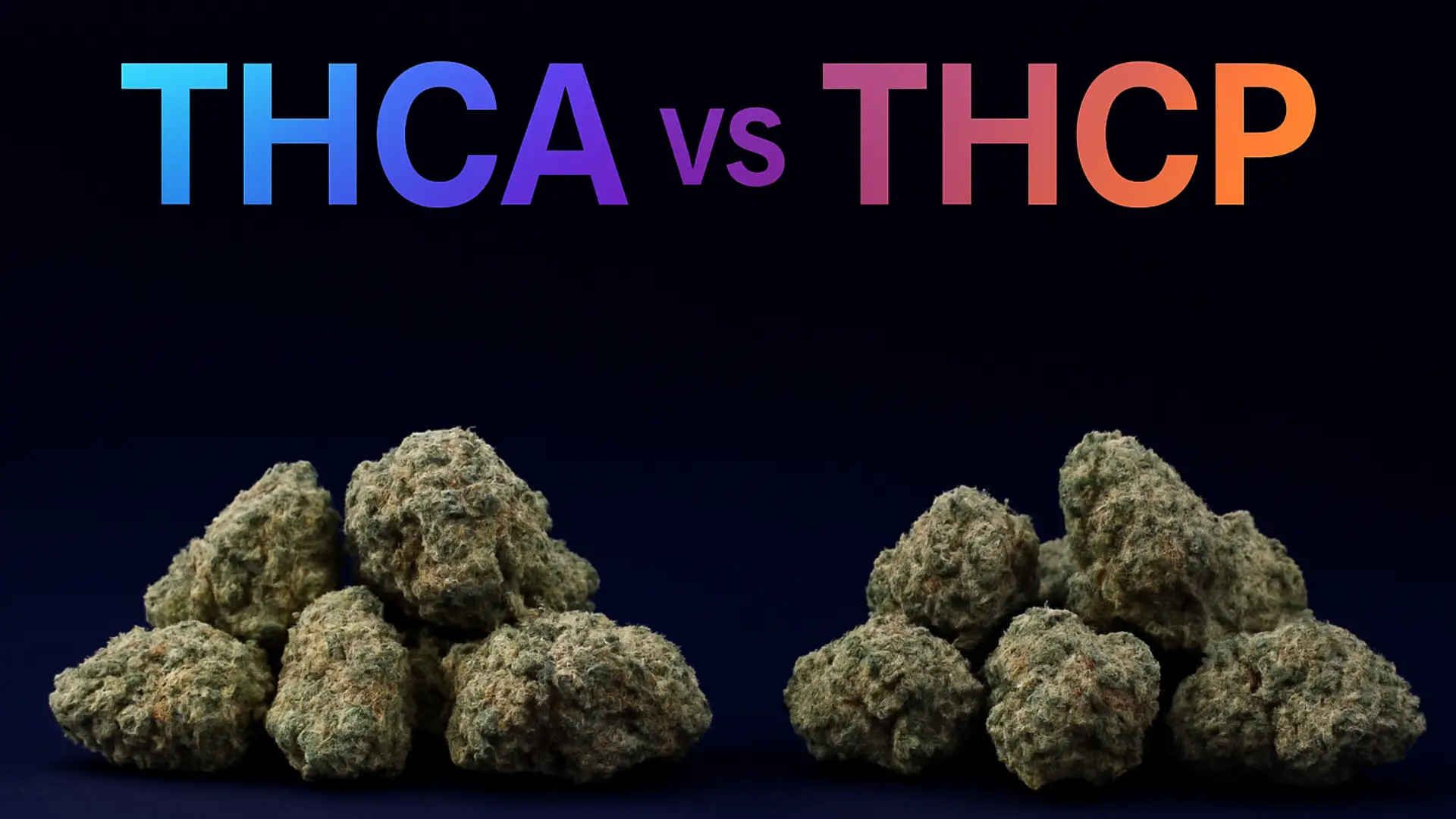
THCA vs THCP: Quick Comparison
| Attribute | THCA | THCP |
|---|---|---|
| Psychoactive raw? | No | Yes active immediately |
| Naturally occurring | Abundant in raw hemp flower | Rare (trace amounts only) |
| Typical source | Grown in hemp flower | Lab-derived from CBD |
| Potency vs delta-9 (felt) | ~1:1 | Est. 5-10x stronger |
| CB1 binding affinity (lab) | Same as delta-9 | ~33x delta-9 |
| Onset method | Smoke, vape, or bake | Any edible, vape, tincture |
| Typical effective dose | 5-15mg | 0.5-3mg |
| Duration | 1-3 hrs inhaled / 4-8 hrs edible | Longer than delta-9 |
| Best for | Beginners to experienced users | Experienced users only |
| Federal legal status | Legal when hemp-derived (<0.3% delta-9) | Legal when hemp-derived (<0.3% delta-9) |
| Drug test risk | Yes, when smoked | Yes |
| Discovered | Long known primary hemp cannabinoid | 2019 (Citti et al.) |
What is THCA?
THCA (tetrahydrocannabinolic acid) is the natural form of THC found in raw hemp flower before any heat touches it. In its raw state, THCA isn't psychoactive it won't get you high, even in large amounts. That's because its molecular structure doesn't fit properly into the CB1 receptors in your brain.t.
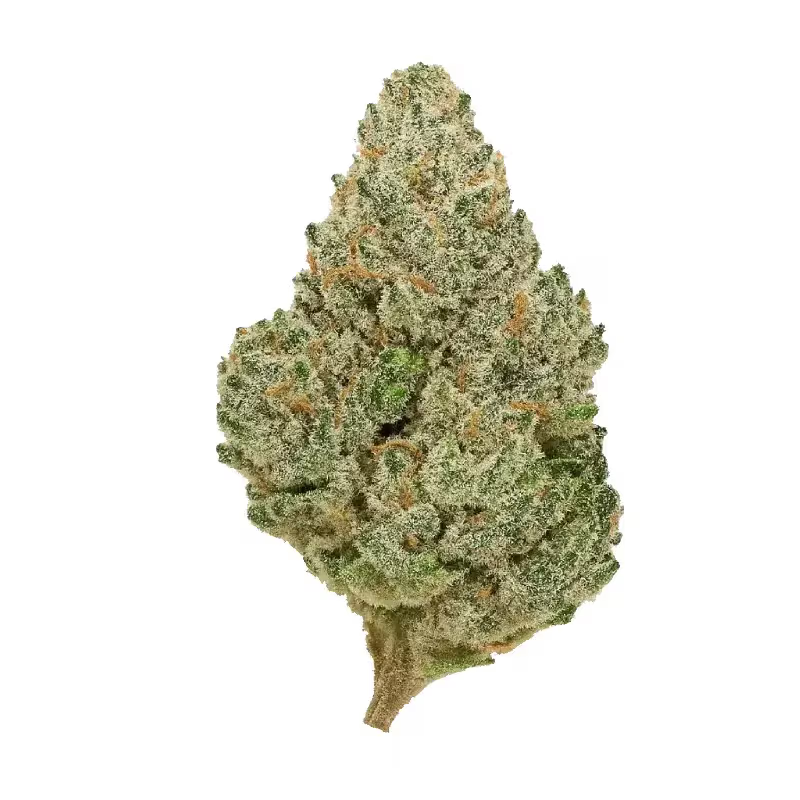
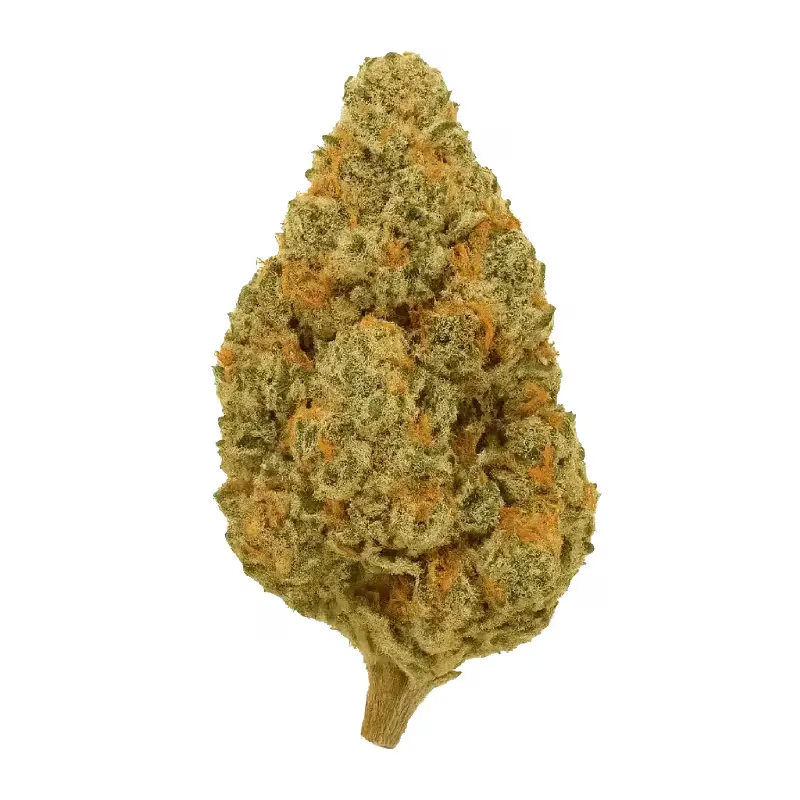
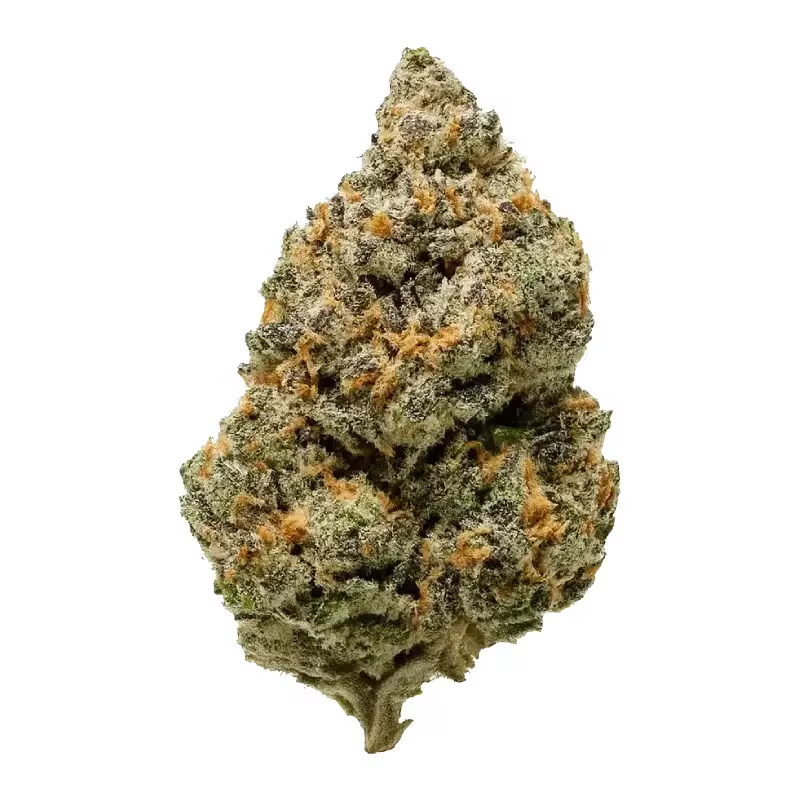
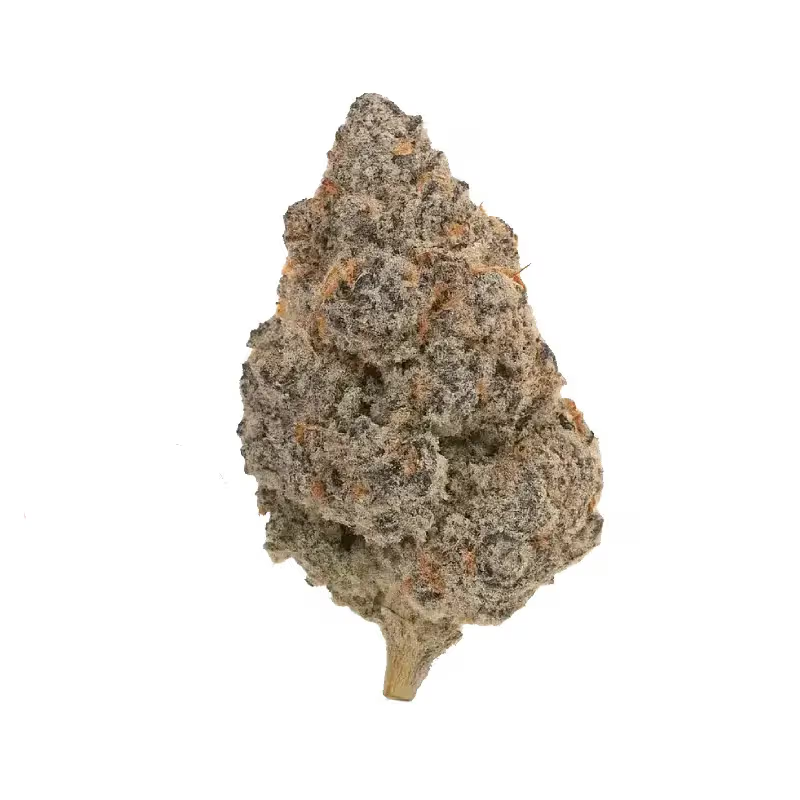
Think of THCA flower as the craft beer of the hemp world. There's real agricultural artistry involved. Growers spend months perfecting genetics, dialing in nutrients, and timing the harvest. The result: dense, trichome-covered buds with real terpene profiles and consistent effects when tested properly. Learn more about how THCA flower is grown.
If you want a deeper breakdown of how THCA compares to traditional THC, we cover that in our THCA vs THC guide.
What is THCP?
THCP (tetrahydrocannabiphorol) was first identified in 2019 by Italian researchers studying a medical cannabis strain called FM2. Their study, published in Nature Scientific Reports, made headlines because THCP bound to CB1 receptors about 33 times more tightly than delta-9 THC in laboratory tests.
What makes THCP structurally different is its 7-carbon alkyl side chain compared to delta-9 THC's 5-carbon chain. That longer chain is what lets it lock into CB1 receptors more efficiently.
Here's the part that often gets glossed over: THCP occurs in cannabis only in trace amounts, often less than 0.1% of the plant. Almost all the THCP you'll see in commercial products isn't harvested from hemp flower. It's semi-synthesized in a lab from CBD isolate and then infused into base flower, edibles, or vapes.
That's not necessarily bad; a lot of hemp-derived cannabinoids are made this way. But it's important to understand what you're buying: most THCP flower is infused, not grown.
Is THCP Really 33x Stronger Than THC? The Myth, Explained
You'll see "33 times stronger than THC" repeated everywhere. It's the stat that made THCP famous. But it's also one of the most misunderstood numbers in the hemp industry, and most articles keep repeating it wrong.
Here's what the 33x number actually measures: the 2019 study tested how tightly THCP binds to CB1 receptors in a lab setting (in vitro). That's called binding affinity. It's a measurement of how well the molecule fits the receptor, not how strong the felt high is.
Binding affinity is not the same as psychoactive potency.
A few reasons why:
- Binding tightness doesn't directly translate to stronger effects. A compound can bind tightly and still produce moderate effects (or vice versa).
- Bioavailability matters. How much THCP actually reaches your receptors after digestion, metabolism, or inhalation is different from what happens in a petri dish.
- The body's endocannabinoid system has feedback loops and tolerance mechanisms that a lab assay doesn't capture.
What's the real number? User reports and follow-up research suggest THCP feels roughly 5-10x stronger than delta-9 THC in actual use, not 33x. Even that figure varies wildly depending on the person, the dose, the delivery method, and tolerance.
To be clear: THCP is genuinely potent. It should be approached with caution. Starting at 0.5-1mg is smart for anyone trying it for the first time. But the "33x stronger" claim is a marketing oversimplification, not established science.
How THCA and THCP Actually Feel
Because THCA converts to delta-9 THC, the effects people experience from smoking or vaping THCA flower are essentially identical to traditional cannabis:
- Familiar euphoria and mood lift
- Body and mental relaxation
- Increased appetite
- Heightened sensory experience at moderate doses
- Onset: 2-10 minutes (smoke/vape), 45-90 minutes (edibles)
- Duration: 1-3 hours inhaled, 4-8 hours from edibles
THCP feels qualitatively different at equivalent milligram doses:
- More intense, sustained euphoria
- Stronger body sedation couch-lock is common
- More pronounced time distortion
- Heightened sensory perception, often described as dramatically more intense
- Onset: Similar timing to delta-9, but effects build higher and plateau longer
- Duration: Longer than delta-9 due to tighter receptor binding
- Anxiety risk: Higher than THCA, particularly above 2-3mg for inexperienced users
The short version: THCA gives you a familiar cannabis experience you can dose predictably. THCP delivers a stronger, longer experience from a much smaller dose with more room to get it wrong if you're not careful.
Natural vs Lab-Enhanced: The Real Divide
The THCA vs THCP question ultimately comes down to natural cultivation versus laboratory processing and what that means for consistency, quality, and predictability.
THCA flower represents traditional craft. It's grown from carefully selected genetics, cultivated through proven methods, harvested and cured for quality, and lab-tested for potency and purity. When you buy premium THCA flower, you're getting the result of agricultural expertise refined over decades.
THCP products represent a newer innovation. They typically start with base flower (or gummy base, or vape distillate) and add lab-produced THCP to create the finished product. This isn't inherently bad; a lot of modern hemp products are made this way, but it does mean you're relying on a manufacturer's process for consistency rather than agricultural skill.
There's also legitimate value in THCP's existence. Experienced users with high tolerance may find that THCA doesn't hit the way it used to. THCP can offer a stronger alternative at small doses. Both compounds have their place; we just think it's important you know what you're actually buying.
Legal Status of THCA and THCP
Both THCA and THCP are federally legal under the 2018 Farm Bill as long as they're derived from hemp and contain less than 0.3% delta-9 THC by dry weight.
That's the federal side. State laws are a different story.
- THCA is treated differently across states. Some states have passed rules that treat THCA as THC-equivalent (because it converts when heated), effectively restricting it. Other states follow federal law directly.
- THCP sits in a grayer area. Because it's usually semi-synthesized from CBD, it can fall under state-level restrictions on lab-derived hemp cannabinoids. A growing number of states are tightening rules on this category.
- Shipping: Most hemp-derived products can ship legally to most states, but it's on the buyer to know their state rules.
If you're ordering online, check your state's current hemp regulations before purchasing. This space changes fast.
Will THCA or THCP Show Up on a Drug Test?
Yes, both will very likely produce a positive result on standard drug tests. The legal status of the product you bought doesn't protect you from testing positive.
THCA: When smoked, vaped, or cooked, THCA converts to delta-9 THC, which then metabolizes into THC-COOH. That's exactly what standard drug tests screen for. Detection windows range from about 3 days for occasional users up to 30+ days for regular users.
THCP: THCP metabolizes through similar pathways and produces detectable THC metabolites. Research is still limited, but detection windows are expected to be at least as long as delta-9, possibly longer, given THCP's stronger receptor binding and slower clearance.
If you have a drug test coming up, neither compound is safe to use, regardless of how the packaging is labeled.
Which Should You Choose?
Choose THCA flower if you:
- Want a familiar, predictable cannabis experience
- Prefer dosing by flower (grams, bowls, joints) rather than milligram edibles
- Appreciate agricultural craft and terpene-rich strain variety
- Are newer to hemp flower or have a moderate tolerance
- Value consistency from batch to batch
Consider THCP if you:
- Have significant THC tolerance and want stronger effects
- Prefer small-dose products (edibles, tinctures, vapes at low concentrations)
- Are specifically looking for sedation or longer-lasting effects
- Are an experienced user who can dose cautiously
- Have verified your state's rules on THCP products
For most people, especially those who enjoy traditional flower experiences, THCA delivers what you actually want: quality, variety, and reliability. THCP is a more niche option for experienced users seeking something stronger at lower doses.
Why BakeBoxx Focuses on Premium THCA Flower
At BakeBoxx, our focus is on premium THCA flower because that's where craft and consistency line up. Carefully sourced genetics, proper cultivation, expert curing, and comprehensive lab testing so you know exactly what you're getting when you open a jar. That's what we do best, and that's what we stand behind. Check out our current selection if you're looking for top-shelf THCA flower done right.
Frequently Asked Questions
Is THCP really 33x stronger than THC? Not in the way most articles claim. The 33x figure refers to binding affinity in a lab assay, how tightly THCP attaches to CB1 receptors, not how strong the felt effects are. Real-world potency is estimated at roughly 5-10x delta-9 THC. It's still a potent compound that requires caution, but the "33x stronger" claim is misleading.
Will THCA or THCP fail a drug test? Yes. Both compounds will very likely produce a positive drug test result. THCA converts to delta-9 THC when heated, and THCP metabolizes into detectable THC metabolites. Hemp-derived legal status does not protect you from failing a drug test. Related article: Does THCA Show Up on a Drug Test?
Is THCP legal? It's federally legal when hemp-derived and under 0.3% delta-9 THC, per the 2018 Farm Bill. However, state laws vary; several states restrict semi-synthesized hemp cannabinoids, which include most commercial THCP. Always check your state's current rules before buying.
Can you use THCA and THCP together? Yes, and some products combine them intentionally. But the combined effect is significantly stronger than either alone, especially when THCA is heated and converts to delta-9, while THCP is also active. If combining, reduce your normal THCA amount and start with 0.5-1mg of THCP. Not recommended for beginners.
Which is better for beginners? THCA. The effects are familiar, predictable, and more forgiving at typical doses. THCP's potency leaves less margin for error, and overdoing it can cause anxiety or an unpleasantly intense experience.
How much THCP should I start with? 0.5-1mg is a reasonable starting point for anyone new to THCP, even if you have THC tolerance. Wait at least 90 minutes before considering more, especially with edibles.
Is THCP natural or synthetic? Technically both. THCP does occur naturally in cannabis, but only in trace amounts, typically less than 0.1%. Nearly all THCP in commercial products is semi-synthesized from hemp-derived CBD in a lab.